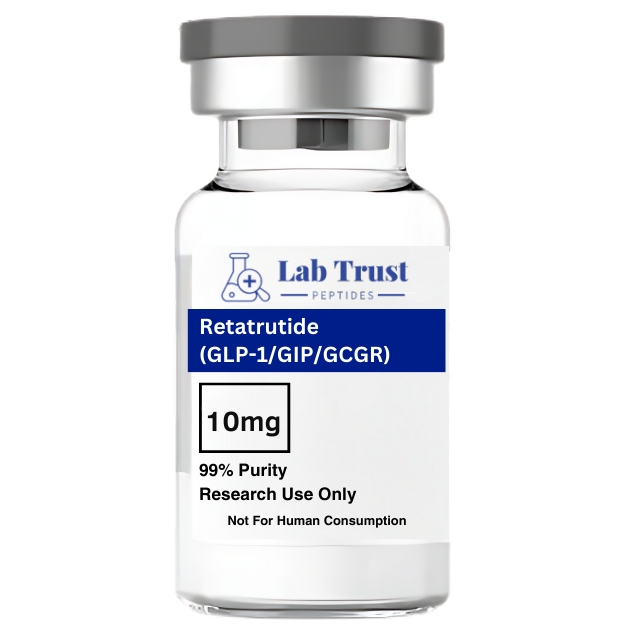
The world of peptide research is evolving rapidly, with scientists exploring compounds that can provide deeper insights into metabolic pathways and endocrine regulation. Among these, Retatrutide has emerged as a fascinating research peptide, capturing attention for its multi-receptor activity and potential in laboratory studies. While it is not intended for human consumption, its role in experimental models provides a unique window into complex biological processes.
What Makes Retatrutide Research Peptide Stand Out
Retatrutide research peptide is distinguished by its function as a triple agonist targeting GLP-1, GIP, and glucagon receptors. This multi-faceted activity allows researchers to study interactions between multiple hormonal systems simultaneously. Unlike single-target peptides, Retatrutide offers a more comprehensive platform for investigating metabolic regulation, energy balance, and glucose-lipid pathways.
- Laboratories value this peptide for its high purity, with many batches exceeding 99% verified by independent third-party testing. This ensures consistency in experimental results, which is crucial for reproducible research outcomes.
In practical terms, Retatrutide is typically supplied in lyophilized vials, requiring careful reconstitution with bacteriostatic water or other approved solvents. Researchers must adhere strictly to laboratory protocols to maintain peptide stability and avoid degradation. Cold-chain shipping and proper storage at low temperatures further support the integrity of this peptide.
Exploring Mechanisms and Applications
Understanding Retatrutide’s potential begins with its action on multiple receptors. GLP-1 receptors influence insulin secretion and appetite regulation, GIP receptors modulate glucose metabolism, and glucagon receptors affect energy expenditure. By simultaneously engaging these pathways, Retatrutide allows researchers to create sophisticated models that mimic the complexity of metabolic systems.
Investigating Hormonal Interactions with Retatrutide Research Peptide
- In laboratory settings, Retatrutide has been used to explore the dynamics of triple-receptor signaling. This provides insight into how hormones interact at a systemic level, shedding light on processes like glucose regulation and lipid metabolism. Its multi-receptor activity also makes it a valuable tool for studying energy homeostasis, offering clues that could eventually inform therapeutic strategies.
Researchers have noted that the peptide’s consistent quality and reproducibility are essential for advanced studies. Certificates of Analysis (COA) accompany each batch, verifying both qualitative and quantitative measures. Analytical techniques like LCMS, heavy metal screening, and sterility testing ensure that every sample meets rigorous standards.
Benefits and Research Considerations
Using Retatrutide in experimental research provides several advantages:
- Enables the modeling of integrated hormonal responses.
- Supports studies in metabolic regulation and energy balance.
- Offers reproducibility through high-purity, certified batches.
It’s important to emphasize that all research findings remain preliminary. Retatrutide is for laboratory use only, and conclusions drawn from experimental studies should not be interpreted as clinical recommendations. Researchers must maintain strict adherence to handling protocols to preserve the peptide’s integrity and ensure valid results.
Conclusion:
Retatrutide represents a significant advancement in peptide research, offering a multi-receptor approach that can illuminate complex metabolic interactions. Its high purity, rigorous quality testing, and reproducibility make it a reliable tool for laboratories exploring endocrine signaling, energy balance, and glucose-lipid pathways.
By integrating retatrutide research peptide into controlled experimental studies, scientists gain an invaluable resource for probing the intricate interplay of hormones, potentially guiding future innovations in metabolic research.